

RAPID Seminar on Socio-economic Priorities for the Next Government

Policy Brief || December 2025|| This policy brief reflects on the efficacy, relevance, and future prospects of targeted community-driven interventions through the lens of RELI’s experience.
Scoping Study on Identifying WASH Sector Investment in the Budget Accounting System of Bangladesh for Effective Tracking
Contents
About the project
Partner: United Nations Children’s Fund (UNICEF)Project duration: November 2025 – March 2026
The assignment involves conducting a scoping study to identify and assess Water, Sanitation and Hygiene (WASH) sector investments within the national budget accounting and reporting system of Bangladesh. The study aims to examine how WASH-related expenditures are currently identified, coded, tracked, and reported across both development and operating budgets. The study responds to persistent challenges in comprehensive tracking of WASH investments due to fragmented institutional responsibilities, limitations in budget coding systems, and partial identification of WASH-related expenditures across ministries. By analysing existing budget classifications, coding practices, and investment flows, the study seeks to improve transparency, accountability, and efficiency in WASH sector financing. The assignment is aligned with Bangladesh’s commitment to achieving SDG 6 and supports UNICEF’s efforts to strengthen evidence-based advocacy, sector-wide planning, and resource allocation for sustainable WASH services across the country.
Objectives of the Study:
The overarching objective of the study is to ensure that WASH sector investments are effectively tracked and monitored, leading to better resource allocation and improved outcomes in water, sanitation, and hygiene services across Bangladesh.
The specific objectives will be to:
- Assess current scope of identification of WASH investments within the budget accounting and reporting system.
- Conduct comparative analysis with best practices from similar contexts and identify challenges and gaps in current budget tagging processes.
- Recommend a standardized approach to improve financial tracking, and sector-wide budget tagging framework.
- Formulate an advocacy strategy to establish a standardized approach to improve financial tracking, transparency, and sector-wide budget tagging and reporting.
- Analyse current WASH investment identification in the budget
- Evaluate current budget coding system
- Identify gaps
- Explore loan repayment
- Recommend improvements
- Propose an advocacy strategy
Project activities
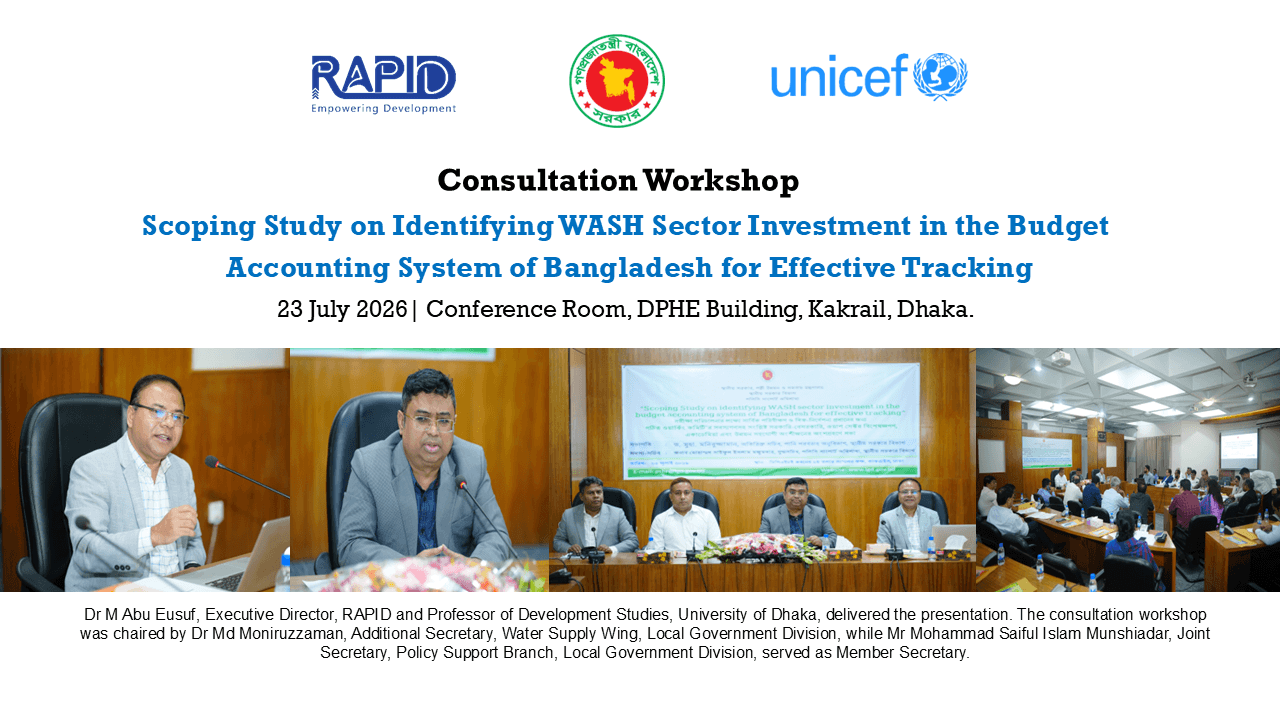
Consultation Workshop: Scoping Study on Identifying WASH Sector Investment in the Budget Accounting System of Bangladesh for Effective Tracking
A high-level meeting on the "Scoping Study on Identifying WASH Sector Investment in the Budget Accounting System of Bangladesh for Effective Tracking" was organised by the Policy Support Branch, Local Government Division, with technical support from UNICEF Bangladesh and RAPID serving as the research partner.
Dr M Abu Eusuf, Executive Director, RAPID and Professor of Development Studies, University of Dhaka, delivered a presentation outlining the study's objectives, scope, methodology, and implementation approach, followed by a constructive discussion with participants.
The session was chaired by Dr Md Moniruzzaman, Additional Secretary, Water Supply Wing, Local Government Division, while Mr Mohammad Saiful Islam Munshiadar, Joint Secretary, Policy Support Branch, Local Government Division, served as the Member Secretary.
The meeting brought together members of the steering committee, alongside representatives from government agencies, the private sector, academia, development partners, and WASH sector experts to provide strategic guidance and oversight for the study.
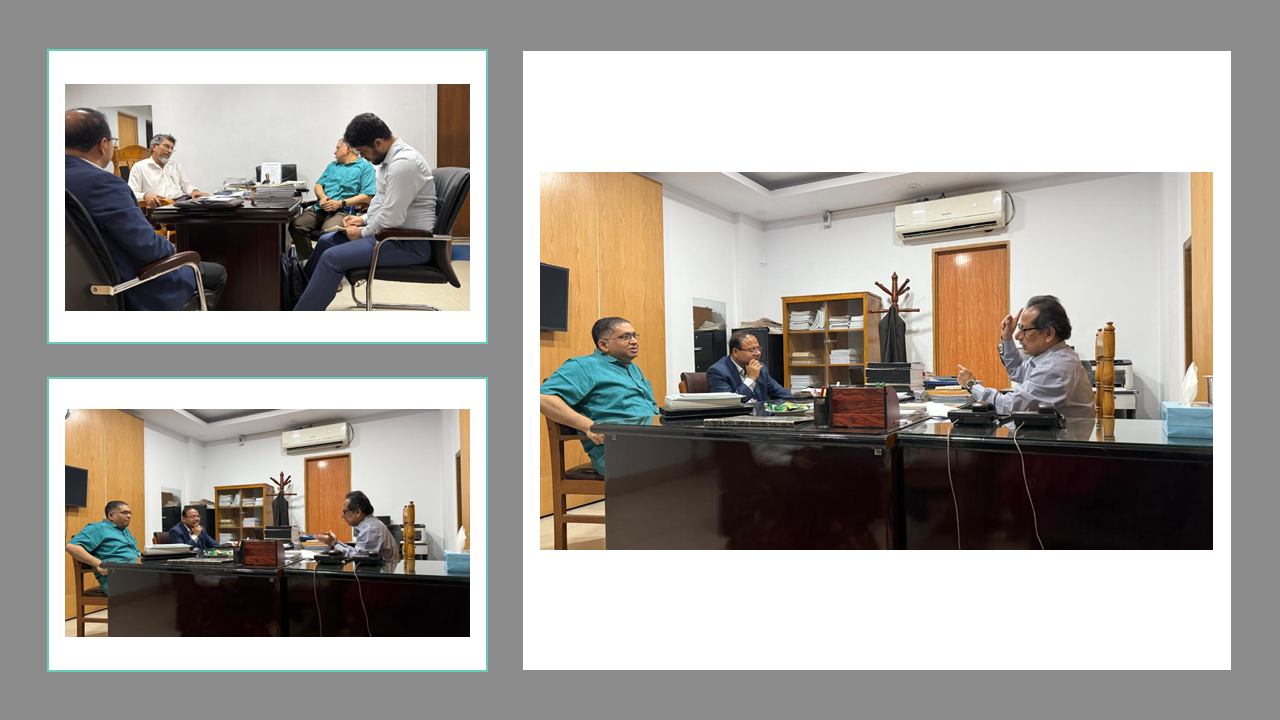
Working Committee Meeting, Department of Public Health Engineering (DPHE), Dhaka
A Working Committee, constituted to provide overall monitoring and guidance to the RAPID consultancy team engaged by UNICEF Bangladesh, held its first meeting on 10 March 2026 at the DPHE building, Kakrail, Dhaka. The meeting was chaired by Dr Md. Moniruzzaman, Additional Secretary, Water Supply Wing, Local Government Division, oriented the Committee to the study’s objectives ahead of the consultation phase.
Following the Committee meeting, the Local Government Division issued a letter (dated 31 March 2026) to the secretaries of twelve ministries and divisions, requesting full cooperation with the RAPID team, led by Team Leader Dr. M. Abu Eusuf, in organising the meetings, workshops, FGDs, and KIIs needed for the study.
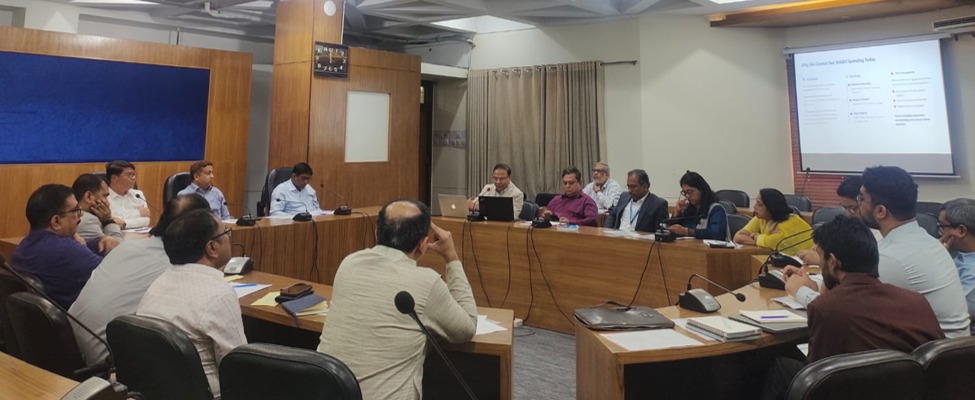
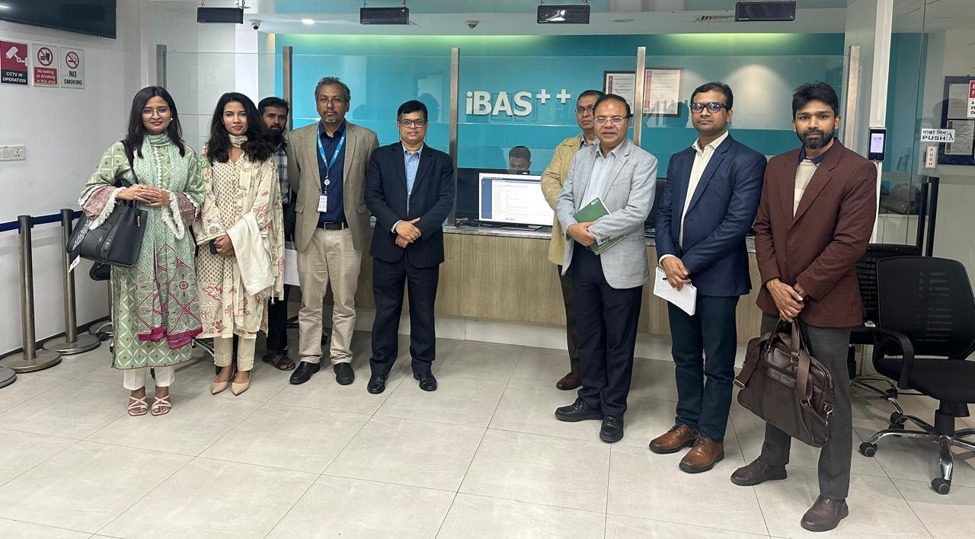
Consultations with iBAS++ Officials
The RAPID team held its first discussion with iBAS++ officials on 29 January 2026, alongside UNICEF Bangladesh, to explore whether WASH allocations could be tracked through existing economic codes, as is done for gender and climate budgeting. Officials noted that current codes do not readily isolate WASH spending, especially within development projects, and discussed alternatives such as project-level percentage weighting, alignment with COFOG codes, and a dedicated WASH reporting segment. A more technical session was held on 15 April 2026, in which the iBAS++ IT team demonstrated how climate change expenditure is currently tracked as a core reporting segment, including how relevance percentages are assigned, verified by the Planning Commission, and reported. This walkthrough informed the team’s understanding of what a comparable WASH tagging mechanism would require within iBAS++.
Key Informant Interviews with Other Stakeholders
The study team also held KIIs with relevant stakeholders from the Planning Division and Planning Commission (2 May 2026), the Finance Division (3 May 2026), the Health Services Division, MoHFW, the Dhaka North City Corporation (5 May 2026), the Education Engineering Department (11 May 2026), and WaterAid Bangladesh (24 May 2026), broadening the study’s evidentiary base beyond the primary iBAS++ consultations.